You send the email. You run the ad. You post the update. And most of the people seeing it feel exactly the same way about it: it wasn't for them. That's not a guess, it's now backed by real numbers, and it explains a lot about why marketing that looks fine on paper still isn't converting the way it should.
What the New Marketing Research Actually Found
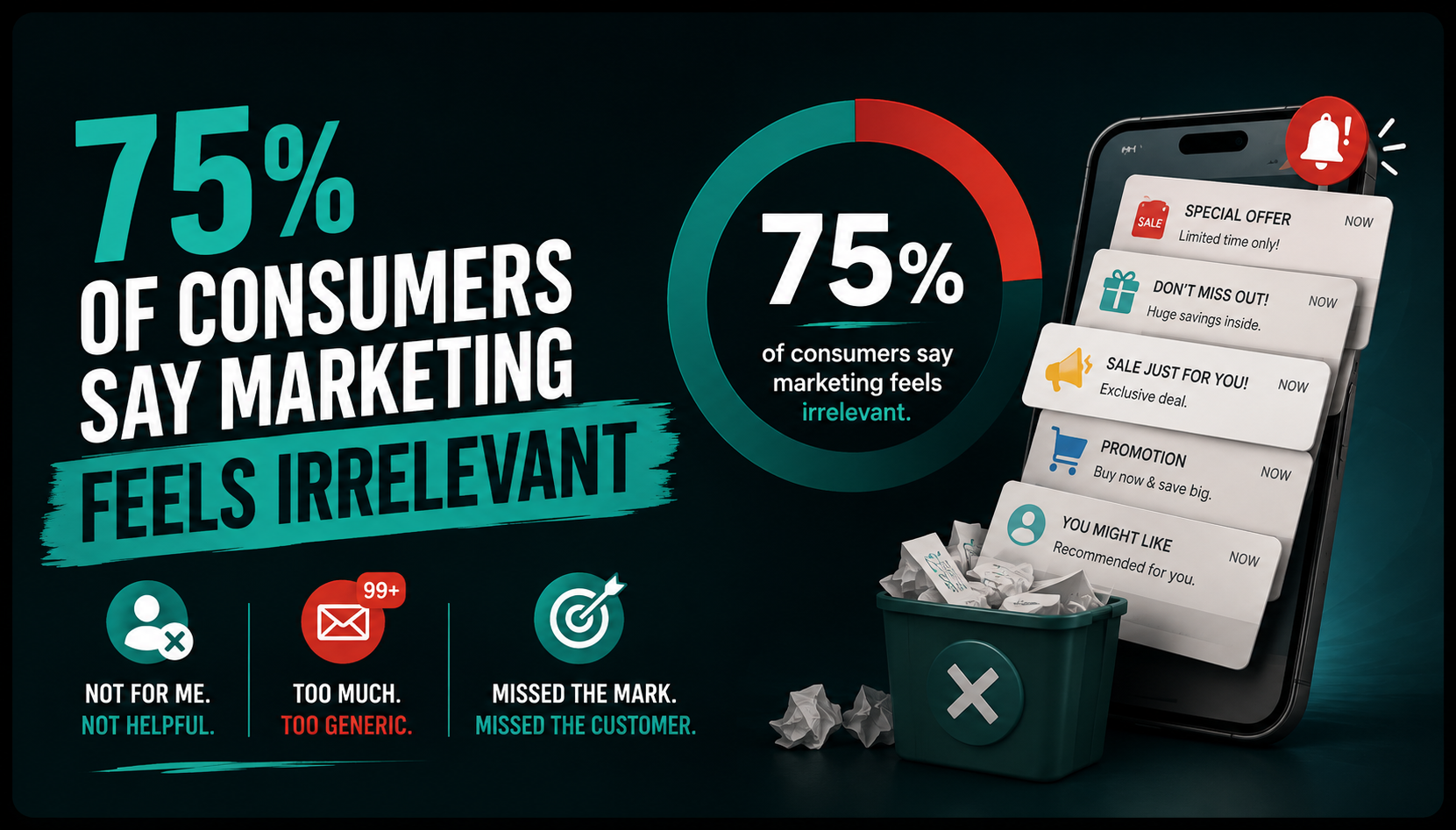
New research from Optimizely, surveying 1,000 consumers and 100 marketers, found that 75 percent of people say the marketing they receive feels irrelevant to them. That's not a small dissatisfaction, that's three out of every four people you're reaching, tuning out before your message even lands.
The same study found 69 percent of consumers say the marketing they receive is often generic or not tailored to them, and 69 percent said they regularly receive duplicate messages or repeated emails from the same brand. Volume is part of the problem too, 61 percent said they feel overwhelmed by how much marketing they receive overall, and 56 percent said it's becoming harder to find brands that communicate in a way that actually feels useful.
Why Is Marketing Starting to Feel So Irrelevant to People
This isn't happening because businesses stopped trying, if anything, most are sending more than ever. The disconnect is coming from the other side of the process. According to the same research, marketers themselves report being under real pressure, six in ten said they often have to launch campaigns without enough time or data to properly target them, and 54 percent said they move from one campaign straight to the next without ever having time to evaluate what actually worked.
That combination, more output, less time to make it relevant, is exactly what produces marketing that technically goes out, but doesn't actually land with anyone.
People don't disengage because they're getting too much marketing. They disengage because too much of it isn't actually meant for them.
What Happens When Marketing Doesn't Feel Relevant
The consequences aren't just theoretical. The research found 42 percent of consumers say they disengage entirely when content feels irrelevant, and 35 percent say they're more likely to unsubscribe from a brand's emails and other communications after even one poor or irrelevant experience.
That's the real cost here. It's not that irrelevant marketing simply underperforms, it actively damages the relationship, making future messages, even genuinely useful ones, easier to ignore or opt out of entirely.
How to Make Your Own Marketing Feel More Relevant
- Segment before you send, not after: A single message to your entire list is the fastest way to guarantee most of it feels generic.
- Slow down on frequency, speed up on relevance: Sending less, but more specifically targeted, consistently outperforms sending more to everyone.
- Build in time to review performance before the next campaign: Rushing from one send to the next, without ever checking what actually resonated, repeats the same mistakes at scale.
- Ask what a specific customer actually needs right now: not just what fits your content calendar for the week.
Is Personalized Marketing Actually Worth the Extra Effort
It's a fair question, personalization takes more time upfront than a single broadcast message. But the data suggests the cost of skipping it is higher, over a third of consumers say they'll unsubscribe after one bad experience, and once someone disengages, winning back their attention costs far more than reaching them properly the first time would have.
This connects to something we've written about before, why visibility alone doesn't win customers, being seen matters, but being seen with something that actually feels relevant is what keeps someone paying attention once you've earned that first look.
What This Means for Your Own Marketing Going Forward
If 75 percent of people already feel this way about the marketing they receive, the businesses that stand out won't be the ones sending the most. They'll be the ones whose audience never has a reason to feel like they're just another name on a list.
Not sure whether your own marketing is landing the way you think it is? Get a free strategy audit and we'll show you exactly what's working, what isn't, and why.