Most businesses have a logo - a name, a colour, maybe a tagline someone came up with in a hurry. They call it their brand and move on. But when customers land on their website, scroll their social, or read their emails, nothing feels connected. That is a brand problem, and it is more expensive than most people realise.
A logo is not a brand
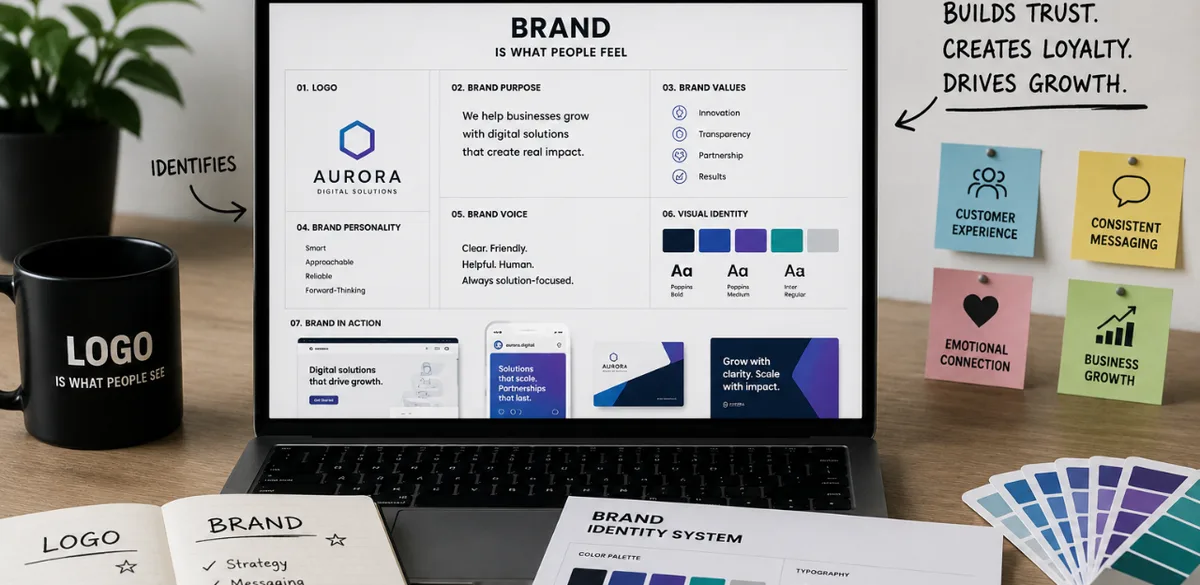
A logo is a visual symbol - the mark on the packaging, the profile picture, the thing at the top of your website. A brand is something else entirely: a brand is not what you say it is, it is what your customers say it is.
It is the gut feeling someone has when they come across your business - the reason they choose you over a competitor with a similar offer, and what makes someone refer you without being asked.
What a brand actually includes
- A clear position - what you stand for and who it's for, in one sentence.
- A consistent voice - your website, replies and posts should all sound like the same person.
- A visual system, not just a logo - colours, fonts, photography and layout.
- A promise that runs through everything - what someone can always expect from you.
Why it matters more in 2026
With AI search engines, social algorithms and ad platforms all favouring businesses with consistent, recognisable signals, a business without a clear identity isn't just unmemorable - it's invisible. Branded web mentions now correlate three times stronger with AI visibility than backlinks.
A logo gets you on the map. A brand is why people come to you specifically.
One question that tells you everything
Ask someone who has never worked with you to describe your business in their own words. If they can tell you who you are, who you're for, and why you're different - you have a brand. If they describe what you do but can't say why it matters - you have a logo.
Most businesses come to Digi Lead Up thinking they need better marketing. Half the time, what they actually need is a clearer brand. Start with a conversation.